Aircraft class
Turboprop charter: the honest workhorse
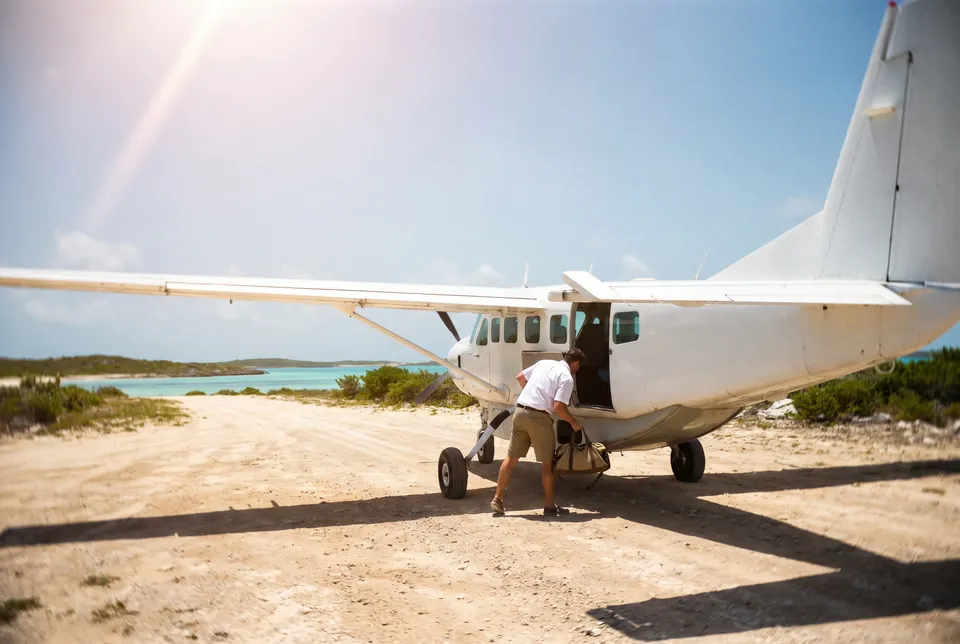
The cheapest way to fly private is a propeller, and on legs under two hours it is often also the smartest: short-strip access jets can't match, hourly rates from US$1,600–3,200/h, and cabins that stopped apologising to jets a generation ago.
Class card
- Hourly rate
- US$1,600–3,200/h
- Seats
- 6–9
- Range
- 2,000 km
- Cruise
- ≈500 km/h
- Typical aircraft
- Pilatus PC-12, Beechcraft King Air 350, Cessna Caravan
- Sweet spot
- Legs under 1,200 km; short or unpaved strips
Where the propeller wins
Three missions belong to turboprops. Short legs: under roughly 1,200 km, block-time differences versus a light jet shrink to 30–40 minutes while the price nearly halves — see Jakarta–Singapore or Buenos Aires–Punta del Este. Short strips: a PC-12 lands where no jet files — island runways, grass, gravel, altiports. Frequency: weekly commuters on routes like São Paulo–Rio fly props because the economics survive repetition.
The honest limits: speed (plan ~500 km/h against a light jet's 700), altitude comfort in weather (props ride lower, so summer-afternoon bumps are more familiar), and range. Beyond two hours' flying, the jet's case strengthens with every extra seat-mile. Single-engine over long water at night is a personal-threshold question — operators fly it legally and daily; passengers who prefer two engines simply say so and the desk prices the King Air or a light jet instead.
Questions about this flight
How much does a turboprop charter cost?
Published rates run US$1,600–3,200/h. A 90-minute hop therefore starts under US$3,000 before fees — though sub-hour sectors meet operator daily minimums, so treat very short flights as 'from the minimum' rather than pure hourly arithmetic.
How much slower than a jet, really?
On a 700 km leg: roughly 35–40 extra minutes. On the short sectors where turboprops shine, the FBO experience is identical and the door-to-door difference often disappears into traffic variance.
How many passengers fit?
6–9 in executive configuration. Luggage holds are generous for the class — ski and dive kit travel better in a PC-12 than in several light jets — but confirm the exact combination in the chat.
Which routes on this site suit a turboprop?
Every route page whose table lists one: Paris–Nice, LA–Vegas, Miami–Nassau and the South American short legs are the natural territory.
Nearby routes and guides

Light jet charter
Light jet charter from US$3,000/hour: CJ3+, Phenom 300 — the class that carries most of private aviation. Real costs, limits, best missions.
São Paulo to Rio
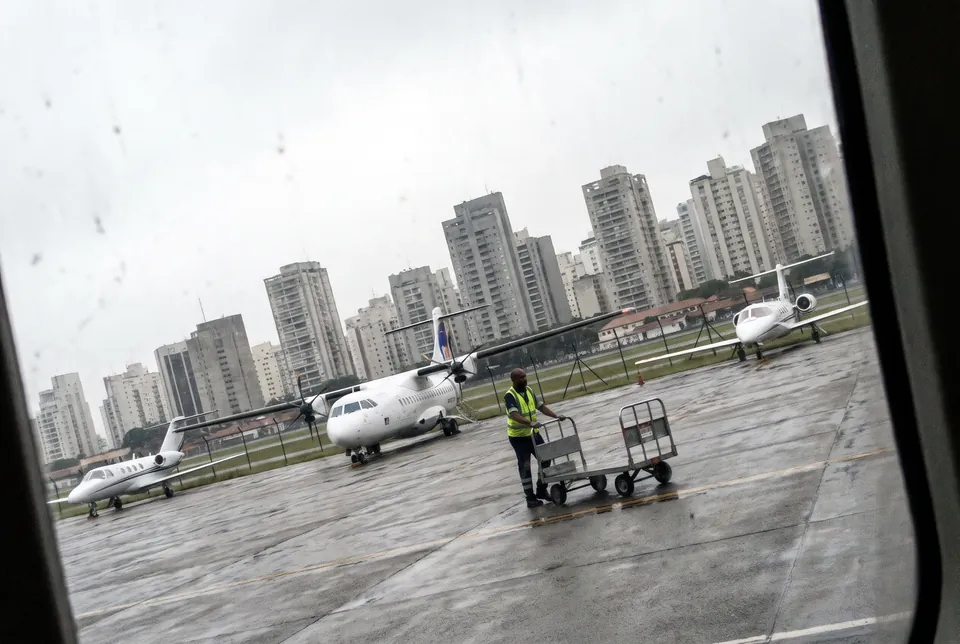
Charter São Paulo to Rio: 55 minutes Congonhas to Santos Dumont, from US$2,000 turboprop. Brazil's business shuttle, downtown to downtown.

Charter cost guide
What chartering really costs in 2026: hourly rates by class, every fee decoded, route benchmarks and the maths brokers skip. No gloss.