The crossover, computed
Private jet vs first class: the honest comparison
The comparison everyone makes and almost nobody computes. Sometimes a charter costs ten times first class; on short routes with full cabins it gets startlingly close; and on the time ledger, it isn't a comparison at all. Here is the arithmetic, run honestly in both directions.
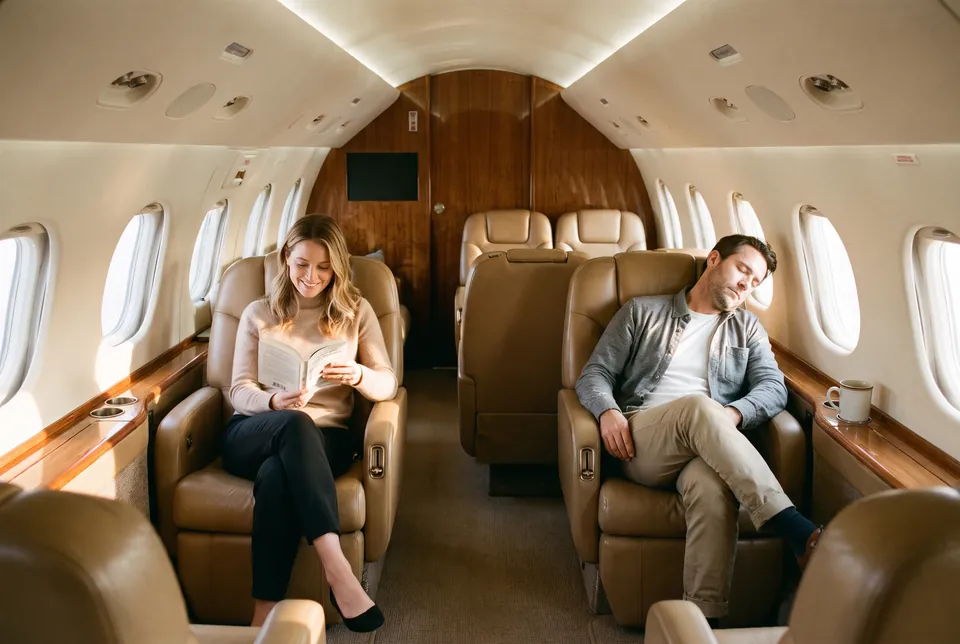
The number that changes everything: seats filled
Charter prices the aircraft; airlines price the seat. Every comparison therefore pivots on one input — how many of you fly. A solo traveller weighing a US$6,000–US$13,000 light jet against a few hundred pounds of airline fare is comparing different universes. Eight colleagues dividing the same jet are comparing it against eight flexible fares bought in a peak week — and that contest gets genuinely close.
This single variable explains the industry's apparent contradictions: both 'charter is obscene' and 'charter was cheaper than our business-class row' are routinely true, about the same aircraft, depending on the manifest.
Per-seat maths on three real corridors
| Route | Charter (class) | ÷ group | Per head | Airline premium fare, peak flexible |
|---|---|---|---|---|
| London–Nice | US$6,000–US$13,000 (light) | 6 | ≈US$1,000–2,200 | Flexible business commonly US$600–1,200 |
| London–Ibiza | US$13,500–US$20,500 (super-mid) | 8 | ≈US$1,700–2,600 | Peak-Saturday flexible fares US$800–1,500 |
| NY–Miami | US$9,000–US$20,000 (light) | 6 | ≈US$1,500–3,300 | First/flexible US$800–1,800 |
Charter figures: this site's computed ranges (block time × published hourly rates, pre-fees). Airline bands: indicative peak flexible fares from published fare observations, 2025 — check live fares for your date.
The time audit airlines can't survive
Fare-to-fare flatters the airline; door-to-door doesn't. The airline's premium short-haul product still includes: arrival 90+ minutes early, security and boarding theatre, taxi-out queues at hubs, baggage claim, and a schedule you bend your day around. The FBO routing deletes nearly all of it — 15–20 minutes from car to climb-out, bags in the hold before you've found the coffee machine.
On London–Geneva, the honest ledger reads: airline 4.5–5 hours door-to-door against charter's 2.5. Multiply the saved two hours by the people aboard and by both directions, and a 'US$6,000 premium' becomes 24 person-hours bought at US$250 each — a rate most of the cabin bills above. This is the real product: the fare comparison is a decoy.
The three-trip audit: run your own numbers
Generic conclusions are where this comparison goes to die, so here is a method instead. Take your last three premium-cabin trips. For each, write four numbers: the fare paid per person, the heads travelling, the true door-to-door hours (calendar, not schedule), and what an hour of that group's time plausibly bills. Then pull the matching charter range from the route pages or the widget, divide by heads, and lay the columns side by side.
Most audits return a split verdict, which is precisely the point. The long-haul solo trips stay airline — comfortably, permanently. One short group trip in three turns out to have been a near-miss where charter would have cost 30–60% more per head but returned four hours per person — a trade at least worth a conscious decision rather than a default. And occasionally the audit finds an outright inversion: a peak-week, four-fare, awkward-schedule trip where the jet was simply cheaper and nobody checked. One such find pays for the habit indefinitely — ninety seconds per future trip, run while the fare screen is still open.
Where first class honestly wins
Run the same honesty in reverse. Long-haul solo: no charter survives comparison with a US$8,000 flagship first fare on Dubai–London when the alternative is US$62,000–US$109,000 for one person. The airline's lie-flat product at a tenth the price is simply the right answer. Hub-to-hub with onward connections: airline networks move your bags through; charter hands them back. The hard product itself: a new first suite's bed, shower and cellar genuinely exceed a light jet's cabin — charter competes on time and control, not on champagne.
The crossover rule of thumb that survives scrutiny: under 3 flight hours with 4+ passengers, run the numbers — they'll surprise you. Over 6 hours or under 3 passengers, fly the airline unless schedule control itself is the product you're buying.
The cases fares can't price at all
Some missions have no airline equivalent at any fare. The Paris–Nice day return built around one lunch. The Jakarta–Singapore departure that waits for your meeting to overrun. The Maldives arrival timed to the seaplane's daylight cutoff. Five airports in three days of due diligence. A nervous flyer, a frail parent, a cello, a film crew's carnets — charter's actual market is missions where the airline product fails structurally, and the fare comparison never even starts.
That's also the honest frame for deciding: start from the mission, not the fare screen. If the airline product fits it, buy the airline product — we'll say exactly that in the chat, and have.
Hybrid plays the industry rarely mentions
The comparison isn't binary. Airline long-haul + charter last leg: flagship first into Singapore, then a positioned light jet to Bali — total cost below full charter, total experience above full airline. Empty legs drop charter per-heads into business-fare territory for the schedule-flexible. One-way asymmetry: charter the time-critical direction, fly the airline home. The desks that volunteer these structures are the ones worth keeping; the arithmetic always belonged to you.
Questions about this flight
Is a private jet ever actually cheaper than first class?
Per seat, on short dense routes with 6–8 aboard against peak flexible fares — the table above shows it brushing distance. Per aircraft, almost never. The honest answer is 'cheaper than eight peak flexible fares, sometimes; cheaper than one, no'.
What's the real cost per person on a charter?
The aircraft price divided by your manifest: US$13,500–US$20,500 across eight is roughly US$1,700–2,600 a head on London–Ibiza. Every route page's range divides the same way — the widget does it live.
How much time does charter actually save?
Short-haul door-to-door: typically 2–3 hours per direction once airport process, buffers and schedule-bending are counted. The per-person-hour price of that time — not the fare gap — is the comparison that decides rationally.
Is the cabin nicer than first class?
What about business class rather than first?
Same framework, lower airline anchor: the group crossover happens later (more heads or peakier fares needed), and long-haul solo tilts even harder to the airline. The structural cases — schedule control, mission shapes airlines can't fly — are unchanged.
Can you just tell me which to book for my trip?
Yes, and we will — including 'fly the airline' when that's the answer; it costs us a booking and earns the relationship. Send route, dates and headcount via WhatsApp and ask for the straight comparison.
Nearby routes and guides
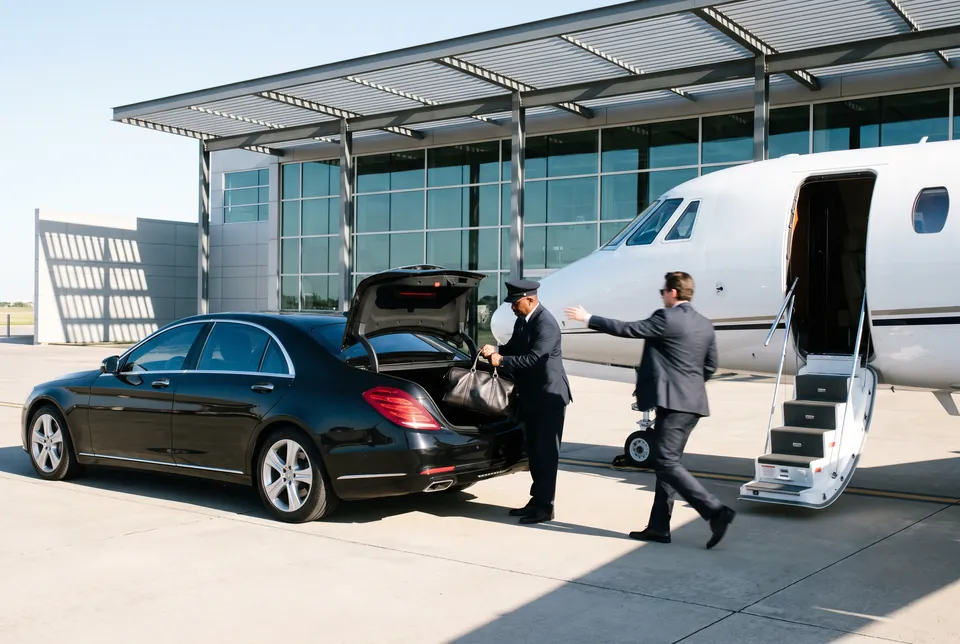
Charter cost guide
What chartering really costs in 2026: hourly rates by class, every fee decoded, route benchmarks and the maths brokers skip. No gloss.
Empty legs guide
Empty legs promise up to 75% off private jet charter. How repositioning flights work, who they suit, the cancellation risk, and how to catch one.
Instant quote
Pick departure, destination, date and passengers: instant price estimate by aircraft class, then send the request to WhatsApp in one tap.